
Tool Regrinding
Services
Tool Regrinding
Our regrinding service restores worn solid carbide tools to near-original cutting performance, helping extend tool life, reduce tooling costs, and support more sustainable production.
- Restore near-original cutting performance
- Reduce tooling costs by over 50% compared with purchasing new tools.
- Reduce CO₂ emissions by reusing existing carbide tools.
Need a regrinding service for your used carbide tools?
Contact our tooling specialist to confirm tool type, wear condition, and regrinding feasibility.
How It Works
Select Tools
Select the worn tools you want to regrind and review our tool wear guide to confirm whether they are suitable for reconditioning. Minimum order quantity: 5 pcs.
Pack Carefully
Use your own shipping box or request a protective box with foam lining from us. Follow the packaging instructions to prevent edge chipping, flute damage, or tool breakage.
Submit Request
Send us your regrinding requirements and available tool details. Our team will review the tool condition, confirm feasibility, and arrange the next service steps.
Safe Delivery
Reground tools will be inspected, packed safely, and returned with clear delivery information. Our team will keep you updated throughout the service process.
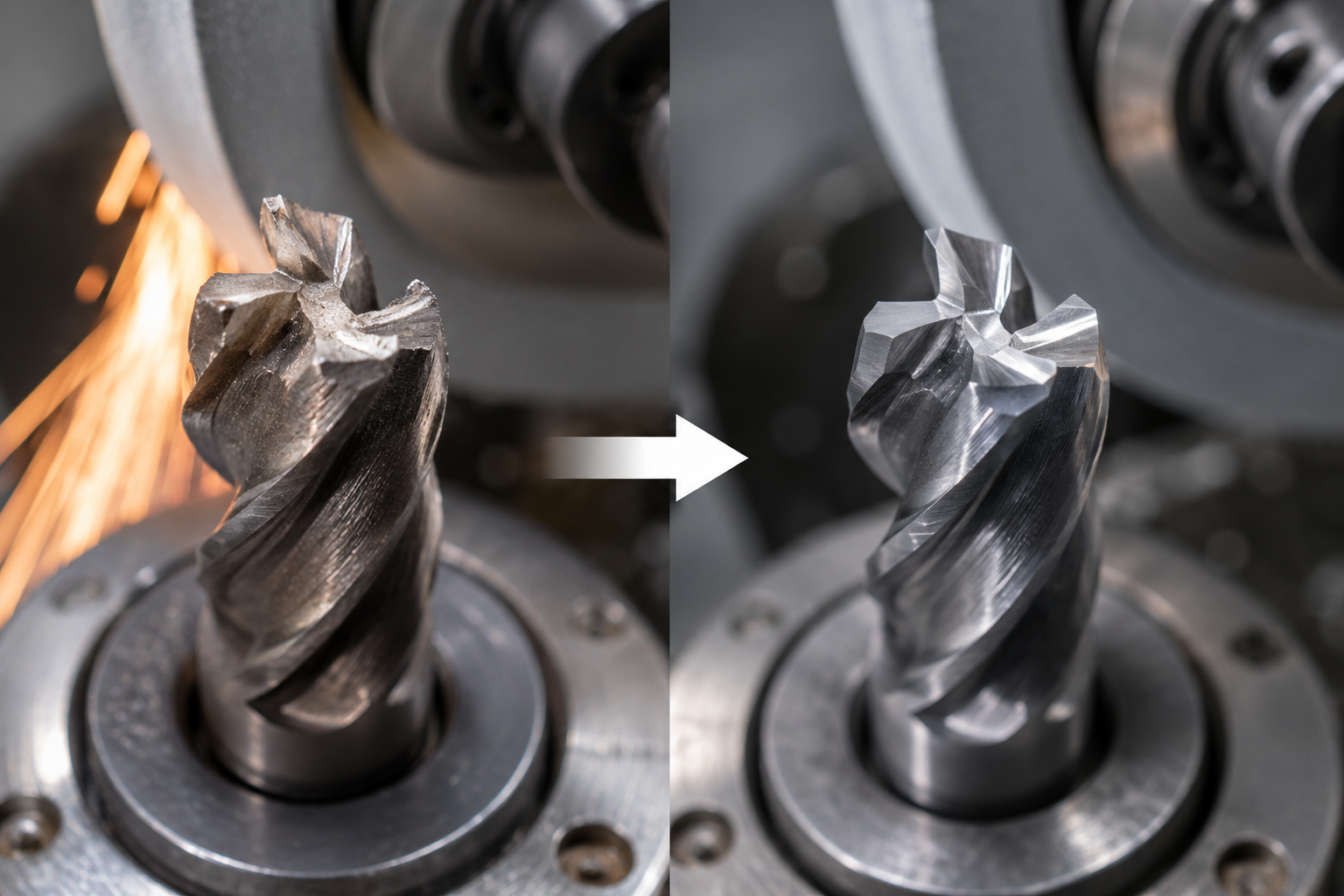
Regrinding Process
Before any work begins, we carefully inspect each tool to confirm whether it is suitable for regrinding. We check wear condition, cracks, and tool geometry to ensure only qualified tools enter the regrinding process.
Worn cutting edges are carefully reground on dedicated CNC grinding machines to restore the original geometry, cutting profile, and machining performance of the tool.
When required, recoated tools receive a new wear-resistant coating to improve protection, durability, and cutting stability in machining applications.
After regrinding is completed, each tool is inspected according to strict quality standards to ensure accurate geometry, clean cutting edges, and reliable performance before delivery.
Benefits of
Tool Regrinding
Restore Cutting Tool Quality
Our regrinding service is designed to restore worn solid carbide tools with controlled grinding accuracy. By reworking the cutting edges and key geometry, reground tools can regain stable cutting performance while helping you avoid unnecessary replacement costs.
Extend Tool Life and Reduce Tooling Cost
Solid carbide tools can often be reground multiple times depending on tool condition, geometry, coating, and application. This helps extend the usable life of each tool, reduce tooling cost, and lower material waste compared with replacing tools after every wear cycle.
The chart below illustrates a typical cost-saving concept: tool performance is restored close to the original level after each regrinding cycle, while the average tooling cost remains much lower than buying new tools repeatedly.
* Results may vary depending on tool type, tool condition, coating, geometry, and machining application. Regrinding is intended to reduce waste and extend tool usage where the tool remains suitable for reconditioning.
How to check if a cutting tool is worn
After selecting the tool to be regrinded, the next step is to identify the tool wear. It is necessary to identify which parts of the tool are worn, the degree of wear, and the type of wear in order to determine whether it is suitable for regrinding.
This video provides clear examples of tool wear to help you identify it:
- Minimum material removal in length and diameter
- Minimum size of cutting tool
- Wear limit
When the knife has served its purpose—recycle it.
When a cutting tool reaches the end of its lifespan, we buy it back and recycle its carbide for use in manufacturing new tools. By using our recycling service, you can help us make the most of existing materials, reduce waste, and contribute to the circular economy in manufacturing.